Episode 20
Dopamine Nation and the Focus I Find in an Emergency
Why does focus show up under stress but feel out of reach on an ordinary day? In this episode of Better World With Design, I review Anna Lembke’s Dopamine Nation: Finding Balance in the Age of Indulgence. I walk through her pleasure-pain balance, the opponent-process and incentive-sensitization theories behind it, the gambling study she cites, dopamine fasting, self-binding, radical honesty, and prosocial shame. I weigh what her patient stories and evidence can and can’t prove, where the line between a habit and an addiction matters, and why I wanted more depth on stress, attention, and AuDHD.
This episode is personal reflection, not medical advice.
Transcript
Welcome back to Better World with Design. I’m Gary Crossey, and today we’re looking at Dopamine Nation: Finding Balance in the Age of Indulgence by psychiatrist Anna Lembke.
The question at the heart of the book is straightforward enough: what happens when the things that give us pleasure are available almost all the time?
Lembke works in addiction medicine, and she draws on her patients’ experiences, her own habits, and research into pleasure and pain. Her argument reaches beyond drugs and alcohol to phones, food, shopping, entertainment, and the many other things competing for our attention.
There’s a lot in that argument worth thinking about. There are also places where I wanted more detail, and places where I think the comparisons need care. So let’s look at what Lembke is arguing, the stories and evidence she uses, and where another way of looking at addiction might lead us.
This is a book by a psychiatrist, not a formal work of philosophy. But underneath the neuroscience are questions philosophers have asked for a long time: Is a good life the same thing as a pleasurable life? Are we free when every desire can be satisfied immediately? And can a limit we choose for ourselves give us more freedom rather than less?
First, a little context. Lembke is a psychiatrist working in addiction medicine in the United States. Her clinical perspective was shaped in part by the opioid crisis. The US Centers for Disease Control and Prevention describes an initial wave of rising opioid overdose deaths associated with increased prescribing in the 1990s, followed by waves involving heroin and then primarily illegally manufactured fentanyl. Those are distinct developments, not one simple story, but they help explain why a doctor treating addiction would be concerned with pain, prescribing, dependence, and access to treatment.
Dopamine Nation was published in 2021, when smartphones and online entertainment had already become part of everyday life. Lembke brings the concerns of an addiction clinician into that wider culture of convenience and constant access. The question is how far that clinical framework helps us understand ordinary habits—and where the comparison begins to strain.
Before we get to the balance, let’s clear up the word in the title. Dopamine is a chemical messenger involved in several brain functions, including movement, learning, and motivation. You’ll often hear it called the pleasure chemical, but that’s too tidy. A reward involves more than one chemical, and wanting something is not identical to enjoying it.
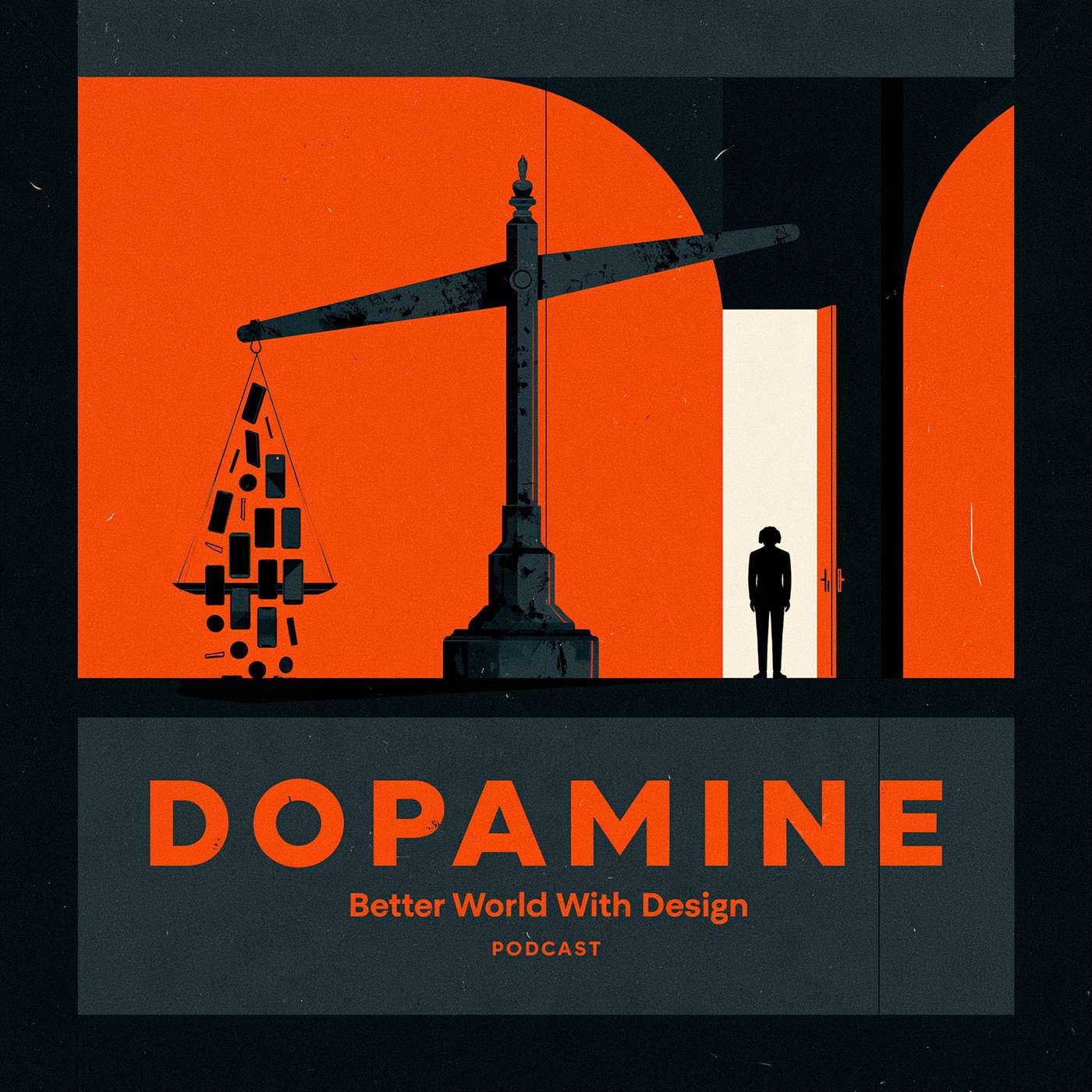
The central image in Dopamine Nation is a balance, with pleasure on one side and pain on the other. Lembke asks us to imagine that when an enjoyable experience tips the balance towards pleasure, the brain responds by working to restore equilibrium. In her account, the balance doesn’t simply stop at level: it tips towards pain before settling again.
That image has a history. Lembke draws on opponent-process theory, developed by psychologists Richard Solomon and John Corbit in the 1970s. In broad terms, the theory proposes that an emotional reaction can be followed by an opposing reaction. Lembke uses that idea as a starting point for explaining why repeated rewards might come with an unpleasant after-effect. It is a framework for interpreting experience, not a direct measurement of an individual brain.
That uncomfortable moment afterwards can make us want to repeat the experience. Have another drink. Watch another video. Keep scrolling. The next reward may temporarily relieve the discomfort, but Lembke argues that repeated, intense stimulation can make the rewarding effect weaker and the unpleasant after-effect more persistent. What started as seeking pleasure can become an attempt to avoid feeling worse.
She connects this idea to tolerance: needing more of a substance to get the same effect, or experiencing less effect from the same amount. In addiction, that can become a serious cycle. The substance may no longer produce the pleasure it once did, but stopping can bring distress and cravings.
A couple of distinctions matter here. Physical dependence means the body has adapted to a substance, so stopping or reducing it can produce withdrawal. Addiction—or a substance-use disorder—involves a broader pattern of impaired control and continued use despite harm. Dependence can occur with prescribed medication without someone having an addiction. Those words are related, but they don’t all mean the same thing.
It’s a memorable way to organize the discussion. You can picture the scale, and you can understand why the urge for more might not be quite the same thing as enjoyment. Lembke is trying to explain the gap between wanting something and actually being satisfied by it.
But there’s an important qualification. The balance is a metaphor. It helps us follow her argument; it is not a little instrument sitting inside the brain, and it can’t tell us what any individual’s dopamine is doing. Pleasure, pain, motivation, and addiction are complicated, and one image can only carry so much. Lembke herself acknowledges that real life is more complex than the scale.
There are other scientific ways of approaching the same problem. Researchers Terry Robinson and Kent Berridge have developed what they call incentive-sensitization theory. Their argument is that, for some people, cues associated with a drug can become powerfully motivating: the wanting can grow even when the liking does not. Think of a place or object associated with past use becoming a powerful prompt, even when the experience itself is no longer especially enjoyable.
That account gives particular attention to learned cues and motivation, rather than explaining the cycle only as relief from a pleasure–pain deficit. The two perspectives aren’t necessarily mutually exclusive, and neither explains every person’s experience. But putting them side by side reminds us that the balance is one model in an active scientific conversation, not the last word on addiction.
Lembke does bring scientific studies into the discussion, so let’s look at one rather than just taking the word neuroscience as a seal of approval. She discusses a 2010 study by Jakob Linnet and colleagues on gambling. The researchers used a brain-imaging method called PET while people performed a gambling task. They compared 16 people with gambling problems with 15 healthy controls.
The researchers reported that participants with gambling disorder who lost money showed greater estimated dopamine release in part of the brain called the left ventral striatum than controls who lost money. Among those who won, they did not find the same group difference. Lembke uses the study to explore why loss and uncertainty may be involved in the urge to keep gambling—not simply the pleasure of winning.
That is interesting evidence, but look closely at what it can and cannot tell us. The groups were small; only eight participants with gambling disorder and five controls fell into the losing groups being compared. PET estimates aspects of dopamine activity indirectly, and this task was a laboratory exercise, not a complete account of gambling in everyday life. The finding suggests a possible connection; it does not prove that dopamine alone caused anyone to chase a loss, or that the same result applies to everyone using a phone.
The book’s second big idea is that our surroundings have changed. Lembke describes a world of abundance: more products, more potent substances, more entertainment, and more ways to get a reward quickly. A phone can bring a stream of novelty within reach at almost any moment, without requiring us to leave the sofa or even put the kettle on.
Her concern is not simply that pleasure exists. It’s the combination of availability, repetition, and potency. When something is easy to reach for and difficult to put down, the question becomes whether we’re still choosing it or whether it has begun to organize our choices for us.
To support that wider argument, Lembke points to more than her own patients. For example, she cites World Happiness Report figures showing that people in the United States reported being less happy in 2018 than in 2008. She also refers to research on anxiety and depression while asking why greater material abundance has not necessarily brought greater contentment.
Those figures give her a reason to ask the question, but they do not, by themselves, establish the answer. A change in reported happiness over time does not show that phones, entertainment, or dopamine caused it. Economic insecurity, health, social relationships, and the way surveys are conducted are among the other things we would need to consider. Lembke presents a hypothesis about overconsumption; the population figures alone cannot prove it.
That’s one of the strongest parts of the book for me. It encourages us to look beyond the individual moment of saying yes or no. If an app is designed to keep presenting another post or video, that design is part of the environment in which the choice happens. It doesn’t remove our agency, but it does mean the story is bigger than telling people to have more willpower.
That question is still current in 2026. Recommendation feeds, autoplay, and notifications can put the next thing in front of us before we have decided whether we want it. Lembke’s framework gives us one question to bring to those designs: how easy is it to pause or stop? But noticing that a feature encourages repeated use is not the same as proving that everyone who uses it is addicted, or that a particular feature has changed their brain.
Looking ahead, the book invites a question for the people building these services as well as the people using them. If systems become better at predicting what will keep us engaged, will they also make it easier to set limits, understand recommendations, and step away? Lembke’s argument makes that a question about design and responsibility, not just individual restraint. It is a question about possible choices, not a prediction that technology must produce a particular future.
At the same time, Lembke puts a wide range of experiences under the same broad lens. She writes about her own romance-novel reading alongside accounts of patients facing serious substance-use problems. The juxtaposition makes her ideas approachable, and it also suggests that she isn’t placing herself above the people she treats. But the comparison needs limits. An absorbing habit and a severe substance-use disorder are not interchangeable. The risks, consequences, and support someone needs can be very different.
The book is at its most interesting when the patient stories complicate the simple picture. Take Delilah, a young patient who tells Lembke that she uses cannabis because she feels anxious. From Delilah’s perspective, cannabis is helping her manage the problem. Lembke wants to explore whether the use might also be contributing to the anxiety.
Notice how the earlier balance idea becomes a clinical question here. Lembke isn’t merely asking whether Delilah feels relief after using cannabis. She is asking what happens to anxiety over a longer period, and what becomes visible when the pattern changes. The first answer—“it helps in the moment”—and the second question—“what is its effect over time?”—can both be worth examining.
Lembke starts by gathering details about what Delilah uses and how. That matters because “I use cannabis” tells us much less than a conversation about frequency, circumstances, and what the person hopes it will do. But the story also has limits as evidence. If someone feels better after a break, the change may be meaningful, while still leaving open other possible influences. One patient’s account cannot by itself establish the cause or tell us what will happen for everyone.
That’s the question behind what she calls a dopamine fast. Despite the name, it does not mean removing dopamine from the brain. Lembke describes taking a break from a particular substance or behavior, often for a month in her clinical practice, and observing what happens. The aim is to get a clearer view of the relationship: what feels difficult without it, what changes over time, and whether the thing that seemed to help might also have costs.
There is a useful distinction there between an assumption and an observation. If someone believes a behavior is helping, Lembke asks what they might learn by stepping back from it. But a patient story is not proof that the same approach will work for everyone, and a month is not a guaranteed reset button for every brain.
There is also a safety point that deserves to be said plainly. Withdrawal from alcohol, benzodiazepines, and some other substances can be medically dangerous. If someone may be dependent on a substance, they should seek medical advice rather than stopping alone. And prescribed medication shouldn’t be stopped or changed without a clinician.
After discussing abstinence, Lembke turns to what she calls self-binding: making arrangements in advance that create distance between an impulse and an action. She groups these boundaries around space, time, and meaning.
A boundary of space might mean keeping something out of immediate reach. A boundary of time might mean deciding when an activity begins and ends. A boundary of meaning might mean drawing a line around the kinds of an activity you choose to engage in.
She uses the story of Odysseus and the sirens: he knows the song will be difficult to resist, so he makes arrangements before he hears it. You don’t need a ship or a crew to understand the point. A decision made calmly in advance may be easier to keep than one made in the middle of temptation.
There’s a principle worth examining in that story. Suppose freedom means more than being able to act on whatever you want right now. Suppose it also means being able to follow a longer-term choice you care about. On that view, a boundary chosen in advance can protect freedom rather than take it away.
That’s a persuasive way to understand self-binding, but it isn’t the only one. A rule imposed by someone else may feel less like freedom, and even a self-imposed rule can become rigid or punitive. Who chooses the boundary, what it is meant to protect, and whether it can be changed all matter. Odysseus gives Lembke a vivid analogy, not a proof that every restriction makes a person freer.
In Lembke’s account, self-binding isn’t just about removing things. It can also be about changing the conditions around them. In one example she has discussed, a patient returns to video games with limits on time and the kinds of games he plays, while making them a more social activity. The aim is not to declare all gaming bad, but to consider what a healthier relationship with it might look like for that person.
I like the design question hiding in there: what could we change about the environment so that the choice we want to make is easier to reach? But a boundary has to be useful in practice. If it adds an impossible rule or turns every ordinary pleasure into a moral test, we may have built another problem rather than solved one.
Lembke also makes clear that not every situation is resolved by putting distance between a person and a substance. In A Broken Balance?, she discusses Chris and the role of buprenorphine in his treatment for opioid use disorder. His experience complicates a simplistic reading of the book as a call to avoid all medication.
The issue has continued to change since the book was published. In its 2026 overview, the US Centers for Disease Control and Prevention describes the later wave of opioid overdose deaths as involving primarily illegally manufactured fentanyl. Its figures also show that the opioid overdose death rate declined from 2022 to 2023, though deaths remained high. That is a reminder to bring current evidence to a book written in 2021, rather than assume the situation has stood still.
Buprenorphine is itself an opioid medication, and Lembke discusses its benefits as well as its complexities. The important point is that treatment can involve medication and professional support. Recovery is not a competition to see who can manage with the fewest resources, and a podcast is no place to prescribe a universal route through it.
This is also a place to distinguish a patient story from a larger body of evidence. Chris’s account shows what the medication meant to him. Beyond that individual experience, a 2024 Canadian clinical guideline recommends both buprenorphine and methadone as first-line options for adults with opioid use disorder, drawing on research that includes studies of treatment outcomes and mortality. The choice and the necessary monitoring depend on the person and their clinical circumstances.
That makes the connection to the earlier chapters clearer. If the first part of the book asks how repeated exposure can change a person’s relationship with a substance, this chapter asks what support may be needed when simply stepping away is not enough. It gives the balance metaphor a more complicated job than just telling people to stop.
The final part of the book turns towards pain. Lembke asks whether deliberately doing difficult or uncomfortable things can produce a different kind of reward. She discusses examples including exercise and cold-water exposure, and considers the idea that an initial discomfort can be followed by a positive response.
Here she is turning the earlier metaphor around. If a pleasurable experience can be followed by discomfort, could a manageable challenge be followed by a positive feeling? She introduces hormesis, the idea that some limited stresses can prompt an adaptive response. The important word is some: the type and dose of a challenge matter.
Lembke also reaches back to Socrates as portrayed by Plato. Socrates observes the relief that follows the removal of his fetters and reflects on the curious relationship between pain and pleasure. It’s a memorable link to an old question: how do we understand an experience that feels good partly because something painful has ended?
But that observation and the scientific claim are not the same thing. A philosophical example can help us recognize an experience; it cannot establish that every pleasure is followed by an equal measure of pain, or that every painful experience leads to pleasure. Those broader claims need evidence.
One piece of evidence she discusses is an old experiment in which dogs were repeatedly given electric shocks. Their observed reactions changed over repeated exposures, and researchers described excited behavior when the shocks ended. It’s a disturbing study, and Lembke acknowledges its cruelty. More importantly for her argument, observing a change in the animals’ behavior doesn’t establish that people should seek out pain, or that cold exposure and exercise work in the same way for everyone. It illustrates a question about adaptation; it doesn’t settle the prescription.
I can see the appeal of that question. Making something, learning a skill, or finishing a demanding piece of work can involve frustration as well as satisfaction. Not every uncomfortable moment means that something has gone wrong.
But I’d be careful about turning that into a rule that more pain must mean more wellbeing. People differ, activities carry different risks, and discomfort is not automatically beneficial. Personally, I’m not going looking for an icy bath just because it might make a good chapter in a book. The more useful question is what kind of effort matters to you, and whether it is safe and worthwhile in your circumstances.
Lembke then moves from individual habits to honesty and connection. In Radical Honesty, she argues that truth-telling can help people recognize behavior they might otherwise hide, including from themselves. If someone can’t acknowledge what is happening, it becomes harder to understand the problem or ask for help.
That idea has force, although honesty needs context. It shouldn’t mean exposing every private thought to everyone, regardless of safety or consequence. The useful part is the invitation to look clearly at a pattern rather than dressing it up in a story that prevents us from seeing it.
The following chapter, Prosocial Shame, is more challenging. Lembke distinguishes between responses that isolate a person and responses that acknowledge harmful behavior while keeping the person connected to a community. Her argument is that accountability and belonging can coexist.
I think the distinction matters, even if the word shame gives some listeners pause. Stigma and humiliation can drive people away from help. A response that protects someone’s dignity, takes harm seriously, and leaves room for repair is a very different thing from telling them they are beyond redemption.
Here’s how I’d put the connection in my own words: Lembke starts with the individual’s relationship to a reward, but she doesn’t end there. Honesty is about making a pattern visible; her discussion of shame asks what other people do when it becomes visible. Do they close the door, or can they make room for responsibility and a way back? You don’t have to accept every part of her terminology to see why that question matters.
So how does the book work as a whole? Lembke takes a simple image—the pleasure–pain balance—and returns to it through patient stories, her own experiences, and practical ideas. That gives the book a clear structure. Even when she moves from addiction to everyday habits, you can usually see how she is connecting the example to her central argument.
The patient stories also give the subject a human scale. Rather than leaving us with an abstract discussion of reward pathways, she shows people trying to understand habits, symptoms, treatment, and relationships. Those stories make the book readable, but they have limits too. A compelling case can illustrate a possibility without proving that the same explanation applies to everyone.
It’s worth looking at how Lembke builds her case. This is not a report of one experiment testing the entire book’s argument. She combines clinical case histories, her own experience, population figures, and research from neuroscience and animal studies. Each can illuminate a different part of the question, but each has different limits. A patient story can show what happened to one person; survey data can reveal a pattern without establishing its cause; an animal experiment can suggest a mechanism without automatically telling us what a person should do.
So what does the book contribute to the wider conversation? Its distinctive contribution here is an accessible synthesis: an addiction clinician brings research, case histories, and the language of recovery together for readers who might never pick up a neuroscience paper. That can open a conversation across medicine and everyday life. It is not, however, the same as presenting a new scientific discovery or proving a single theory of every kind of pleasure.
For a listener new to the subject, the balance is a useful doorway. For someone looking for a fuller account of the evidence, it is a starting point: follow the studies, ask what was actually measured, and look at competing explanations as well.
Her position as an addiction psychiatrist is both a strength and a possible source of bias. She has direct experience with people whose use is causing serious harm. But the people who come to an addiction clinic are not a representative sample of everyone who drinks, plays games, or reads novels. That clinical lens may draw attention to the ways a behavior can become harmful more readily than to the many occasions when it does not. It is fair to ask how well an insight from treatment carries over to the general population.
The same care applies to the broader argument about abundance. Easy access and persuasive design may help explain why a behavior is repeated, but they are not the only things that shape risk. Lembke herself discusses poverty, trauma, mental illness, and unequal access to resources alongside consumption. The question is whether her pleasure–pain framework gives enough weight to those conditions, rather than leaving them in the background.
Housing, social support, the type of substance, and access to care can all matter. Someone can find a phone hard to put down without experiencing the same risks as someone dependent on opioids. An explanation that attends to those circumstances may be less neat than a single balance, but it can be more useful.
For me, the strength and weakness of the book are closely related. The central idea is accessible, but Lembke returns to it so often that, at times, it felt spread as thin as marmalade. I wanted a denser discussion of the science and more room for questions that don’t fit neatly on either side of the scale.
There is also a value judgment running through the book: that a life with room for agency, honesty, and connection is preferable to one increasingly organized around a compulsive reward. I find that a compelling idea. But it is worth separating the judgment from the evidence used to support particular claims about the brain. A study can help us investigate what happens when behavior changes; it cannot, by itself, settle what makes a life meaningful.
And we can test the assumption without dismissing it. If we accept, for the sake of argument, that more immediate pleasure does not always make life better, what follows? Perhaps the question is not whether to eliminate pleasure, but whether it leaves us able to participate in the relationships and activities we value. The next question is who gets to decide what those values are. I’d want the individual’s circumstances and choices to remain at the center.
I came to the book particularly curious about dopamine, stress, and attention. Dopamine Nation gave me a broader conversation about pleasure and compulsive behavior, rather than a detailed answer to that question. That’s not necessarily a failure of the book; it may simply be a different book from the one I hoped to find.
And as an introduction, it has plenty to offer. It asks us to consider what we reach for, whether it still gives us what we expect, and what happens when the easiest source of relief becomes difficult to put down. It also asks us to think about the environment around those choices, the value of honest observation, and the importance of connection when people are struggling.
My reservation is that an engaging metaphor can be mistaken for a complete explanation. The balance gives us a way into the subject, not a personal dopamine reading or a diagnosis. And the distance between a distracting habit and addiction is too important to gloss over.
So, would I recommend Dopamine Nation? If you’re looking for an accessible introduction to Lembke’s way of thinking about pleasure, pain, and addiction, I think it’s worth a look. If you’re hoping for a detailed account of attention, stress, or the neuroscience behind them, you may need to keep looking beyond it.
I’d love to know what you think. Does Lembke’s pleasure–pain balance help you see familiar habits differently, or does the metaphor leave out too much? And where do you draw the line between a pleasure you enjoy and a pattern that no longer serves you?
Thanks for spending this time with me on Better World with Design. Until next time.